By Jann Darsie
Notes From Ella is presented with support from the New Orleans Jazz & Heritage Festival and Foundation.
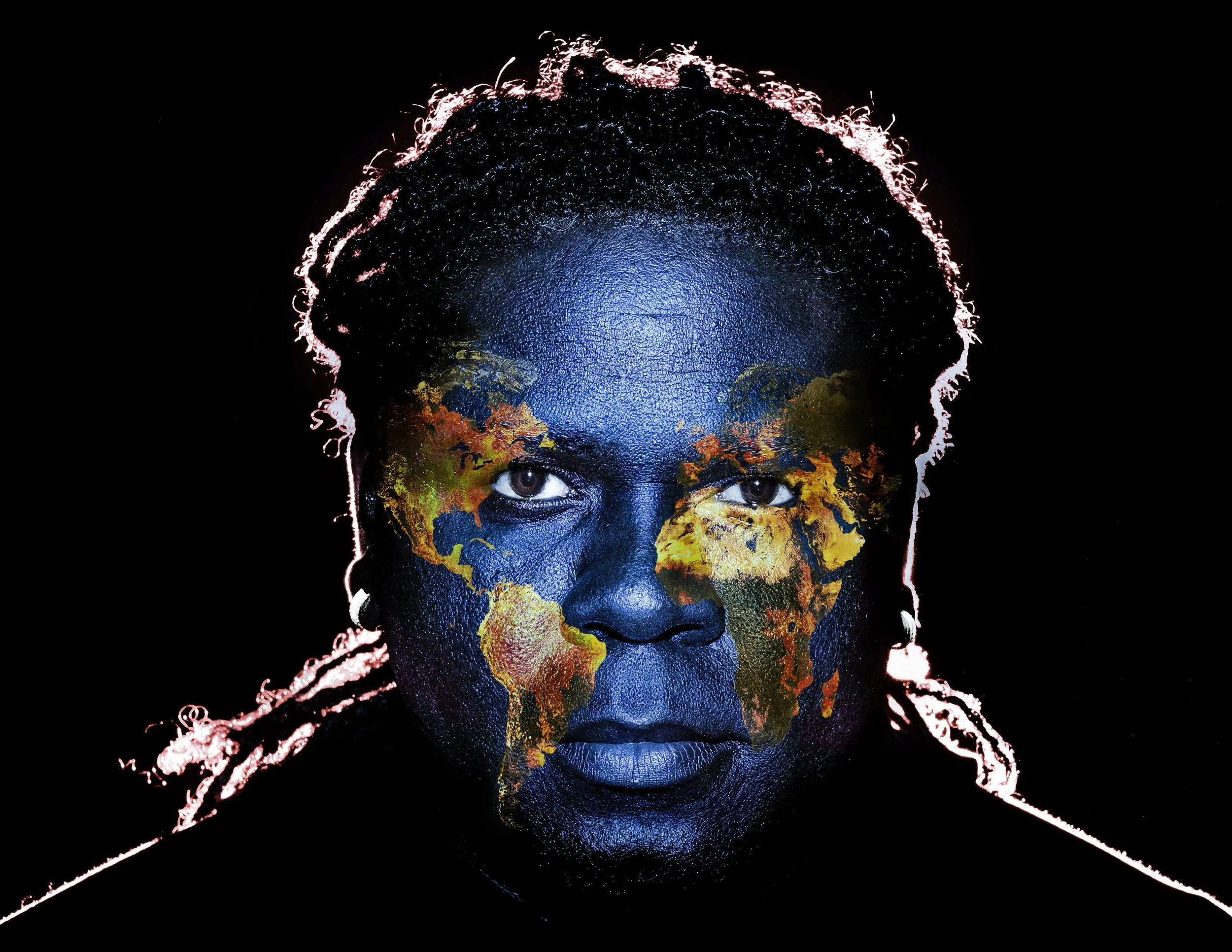
When percussionist Alexey Martí moved to New Orleans from his native Havana, Cuba in December 2008, the city did not yet have the vibrant Cuban music scene it has now. He has since witnessed a change in the number of artists playing Afro-Cuban music and the number of Cuban musicians who call New Orleans home.
There were some hints of things to come. Los Hombres Calientes had been around for 10 years in 2008, and singer Margie Pérez was gigging but had not established her Cuban band.
Like many local musicians, Martí began with his family’s worship. As a preschooler in Cuba, he played the congas at his grandmother’s house for their religious practice of Santería. “Drumming is part of the ceremony,” Martí said, “and I learned by watching my uncle play.”
By the time he was 14, Martí was taking lessons from master percussionist Oscar Valdés, who was a neighbor as well as a founding member of the Grammy award-winning band Irakere. When Irakere disbanded, Valdés started another band, Diákara, which blended folk and popular music and is often associated with the evolution of Afro-Cuban jazz. Martí, then older and more accomplished, played with Diákara for a couple of years.
He went on to record albums and play with salsa groups. One of these gigs led him to Panama to play for Carnival. The musical traditions of Panamanian Carnival are heavily influenced by Cuban music, and the most popular dances traditionally feature bands from Cuba. It was there that Martí met his wife, Claudia Vallejo, which eventually led him to New Orleans.
At the time, he was working musician with a life in Cuba and no thought to move elsewhere. But Vallejo was moving to New Orleans to study at Tulane University. She convinced Martí that he could build a career in New Orleans.
“I used to listen to Radio Progreso in Havana, and they play a lot of music from New Orleans, so I was already familiar with the ‘New Orleans sound’,” Martí said.
It was Bill Summers, percussionist with Los Hombres Calientes, who introduced Martí to the local music scene. Martí calls Summers “my godfather.”
So Martí was off and running, creating his vibrant percussive sound on the congas. He played with Los Hombres Calientes before striking out on his own. He created a record label, Sangunga Productions, and released his first album, Travesía (Crossing), in 2015.
In 2018 he was recognized with a Big Easy Award for “Best New Latin Artist,” and the following year he won “Best Latin/World Music Artist.” “Every time you get a recognition like that, it’s a serious thing,” Marti said. “I was so appreciative; it was so nice for me.”
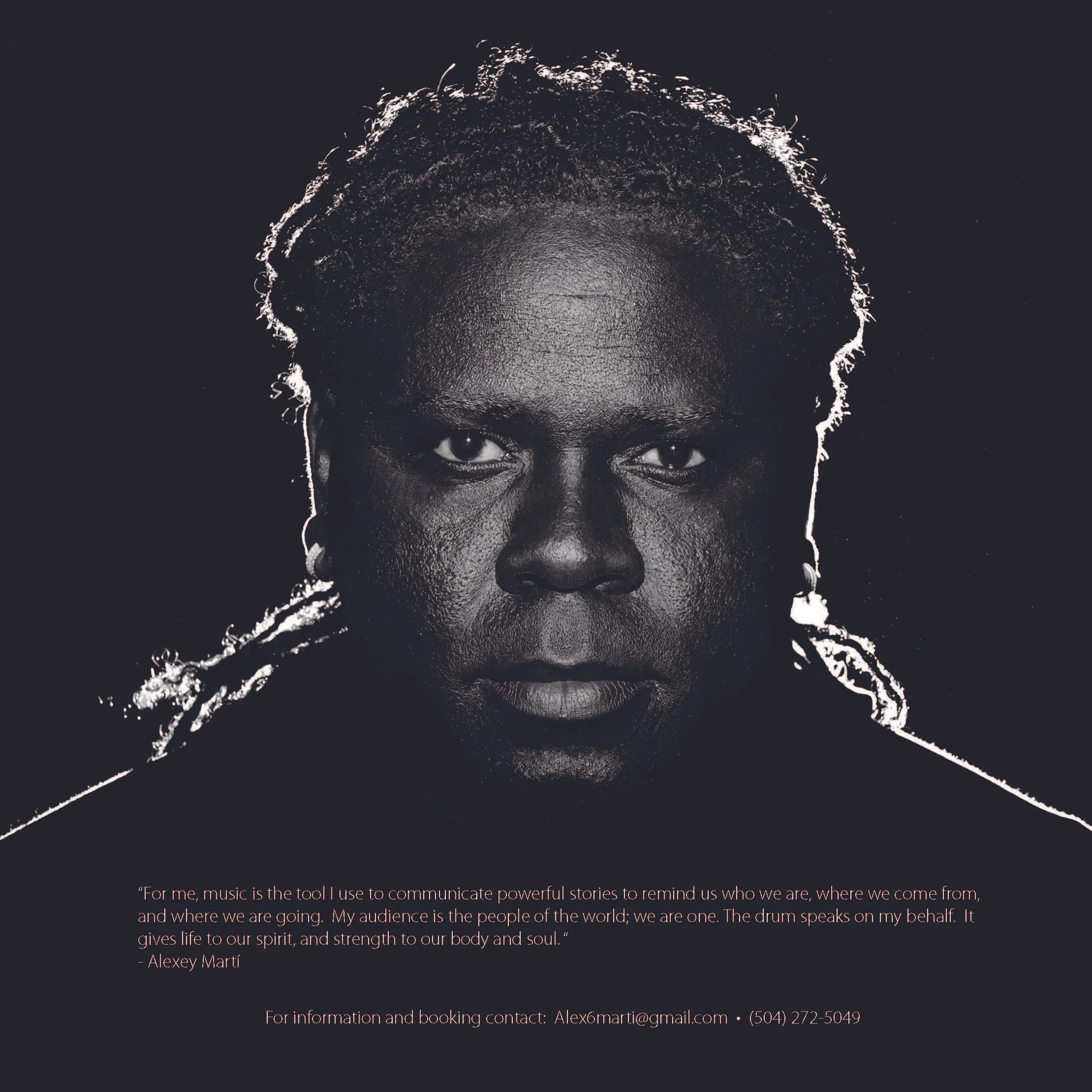
In addition to Afro-Cuban music, he is also known for his world music sound. He pays tribute to this on his website, stating: “For me, music is the tool I use to communicate powerful stories to remind us who we are, where we come from, and where we are going. My audience is the people of the world; we are one. The drum speaks on my behalf. It gives life to our spirit, and strength to our body and soul.”
He released his second album, Mundo (World), in 2019. His music combines folkloric and current Cuban musical traditions with West African drumming and the sounds of New Orleans. This places Marti as a vital part of the evolving genre of Latin jazz.
The Ella Project, Martí said, helps to keep the New Orleans music scene healthy. “This is a great project for the musicians. The Ella Project is a very powerful and necessary tool for independent musicians without knowledge of the music industry,” he said. “To me, the Ella Project is a shield that helps to protect the musicians and the New Orleans culture.
We musicians don’t have enough resources to pay a lawyer, or we lack many times the knowledge about law and contracts.”
Although Los Hombres Calientes is no longer together, there is an ever-increasing amount of Cuban music in the city today.
“I think Cuban musicians are very attracted to New Orleans because we love jazz. Music is quite a serious pursuit in Cuba, and I guarantee the Cuban sound here is only going to grow and strengthen,” Martí said.
Some notable local musicians with Cuban roots, in addition to Martí, are Margie Pérez, David Navarro, Yusa and Victor Campbell.
Singer, songwriter and band leader Margie Pérez, whose parents emigrated from Havana, created a big band called Múevelo as a tribute to the late Celia Cruz. Cruz, known as “the Queen of Salsa,” was a multiple Grammy winner. Pérez also plays with her smaller group, Grupo Latino, as well as a number of other bands.
David Navarro is a Cuban trumpet player known for combining Havana rhythms with New Orleans jazz. A key figure in the next generation of Cuban musicians, he performs regularly with the New Orleans Jazz Orchestra, Cimafunk and his own band, Tropical Jazz Secrets.
Yusa, who was born in Havana, is a guitarist, bassist, vocalist, tres player and composer. She relocated to New Orleans in 2020 and has collaborated with many of the city’s most talented musicians. As the original bandleader of Cuban bands Interactivo and Quasi Jazz, her compositions have earned her international acclaim and multiple awards.
Victor Campbell is a virtuoso piano player from Camagüey, Cuba. His compelling style combines charisma and technical prowess. He first visited New Orleans in 2012 as part of an exchange program with the Louis Armstrong Summer Jazz Camp, and seven years later he decided to move here.
While immersed in Afro-Cuban rhythms, Martí enjoys working in multiple genres. He is, for example, currently recording an album that he describes as “a tribute to Black American music in the 1970s,’80s and ’90s.”
Alexey Martí can be seen regularly at such venues as Snug Harbor, and he has played a number of times with New Orleans icons such as Herlin Riley, Davell Crawford, Adonis Rose and Delfeayo Marsalis (including on some of the latter’s albums). He is also a member of the New Orleans Jazz Orchestra.
His career has also expanded into TV and films. He worked as a percussionist for the TV series Roots (2016) and was the film composer for two documentaries: Dreams: A Leah Chase Story and Código Color Memorias.
Look for him on May 2nd at the New Orleans Jazz and Heritage Festival.
Alexey Martí can be found on his website alexeymarti.com as well as on Facebook and Instagram @alexeymarti.